The Evolution of Digital Expression: AI Art & Creativity How Artificial Intelligence Is Transforming Modern Art 2026

Explore how artificial intelligence is revolutionizing modern art and creative expression. Learn about tools, techniques, benefits, challenges, and the future of AI-driven creativity. AI Art & Creativity
Introduction: A New Era of Digital Expression
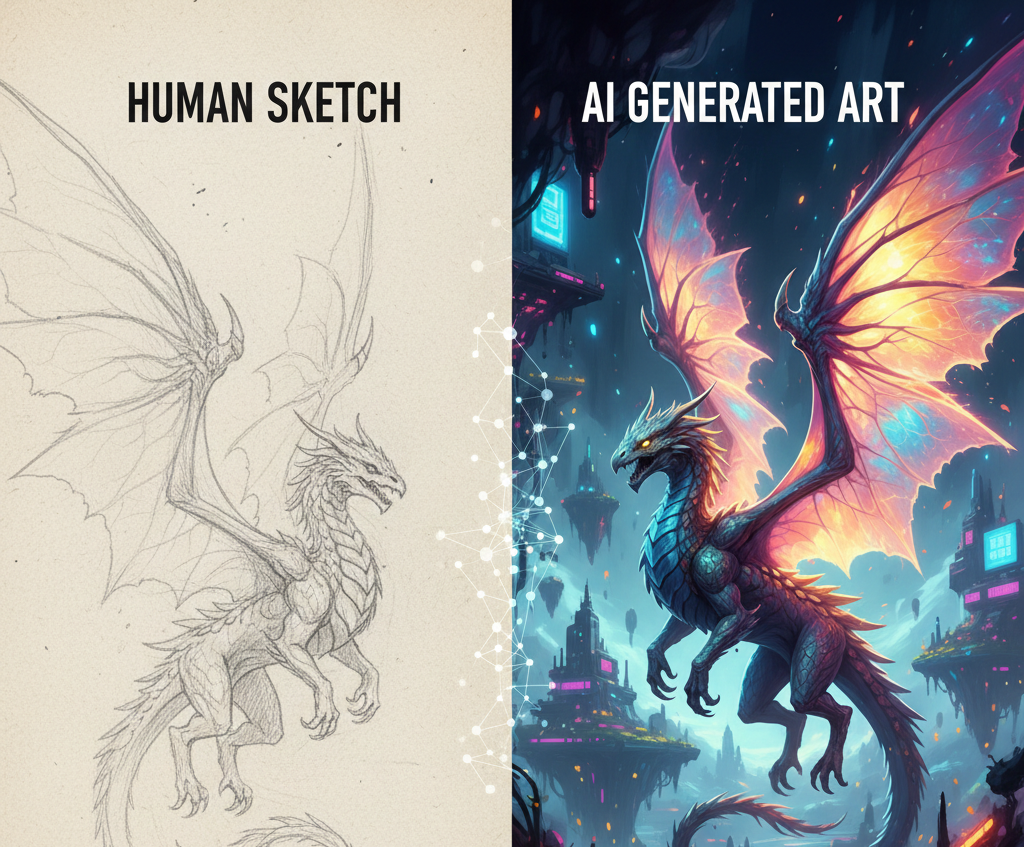
In the modern digital age, technology has become deeply intertwined with human expression. Artists, designers, and creators are no longer limited to traditional tools such as brushes or cameras. Today, AI Art & Creativity represents a powerful shift in how ideas are visualized, designed, and shared. Artificial intelligence enables machines to analyze patterns, learn artistic styles, and generate original artwork that blends human imagination with computational intelligence. This fusion has opened new doors for innovation across multiple creative industries.
The Historical Roots of Intelligent Art AI Art & Creativity
To understand the rise of intelligent creativity, it is important to look at its origins. Early digital art relied heavily on manual input, but advancements in machine learning changed everything. AI Art & Creativity evolved when neural networks and deep learning models began studying millions of images, paintings, and designs. By learning from data, these systems gained the ability to replicate styles and create new visual interpretations, marking a historic moment in the evolution of art.
Popular Tools Powering Creative Intelligence
Modern creators have access to a wide range of platforms powered by artificial intelligence. From text-to-image generators to style-transfer applications, AI Art & Creativity is supported by tools like generative adversarial networks (GANs) and diffusion models. These tools allow artists to experiment freely, reduce production time, and visualize concepts that were once impossible to create manually. Even beginners can now produce professional-level visuals with minimal technical knowledge.https://smartcareerzone.com/
Techniques Used in AI-Driven Art AI Art & Creativity
The technical backbone of intelligent art lies in advanced algorithms. Techniques such as deep learning, neural style transfer, and computer vision are central to AI Art & Creativity. These systems analyze color, composition, texture, and form to generate unique outputs. By combining multiple datasets and training models continuously, AI systems refine their results, producing artwork that feels both innovative and emotionally engaging.
Benefits for Artists and Designers AI Art & Creativity
One of the biggest advantages of intelligent tools is accessibility. AI Art & Creativity empowers artists by removing barriers related to skill level, time, and cost. Designers can rapidly prototype ideas, illustrators can explore multiple styles instantly, and marketers can generate custom visuals at scale. Rather than replacing human talent, AI acts as a creative partner that enhances productivity and inspiration.
Real-World Applications Across Industries
The influence of intelligent creativity extends beyond galleries and social media. AI Art & Creativity is widely used in advertising, gaming, fashion, film production, and education. Brands use AI-generated visuals for campaigns, game developers create immersive worlds faster, and educators use visual AI tools to make learning more engaging. This wide adoption highlights the growing trust in AI-driven creative solutions.
Challenges and Limitations
Despite its advantages, intelligent creativity comes with challenges. Issues related to originality, copyright, and data bias often arise. AI Art & Creativity depends heavily on existing datasets, which may reflect cultural or stylistic limitations. Additionally, some critics argue that AI-generated art lacks true emotional depth. Addressing these concerns requires ethical guidelines, transparency, and responsible use of technology.
Ethical Considerations in Intelligent Art
Ethics play a crucial role in shaping the future of creative AI. Questions about authorship and ownership are common in discussions about AI Art & Creativity. Who owns an artwork created by a machine? How should original artists be credited when their styles influence AI models? Clear policies and fair practices are essential to ensure that creativity remains respectful and inclusive.
The Future of Creative Intelligence
Looking ahead, intelligent creativity is expected to grow even more sophisticated. As models become more advanced, AI Art & Creativity will likely enable deeper collaboration between humans and machines. Personalized art, interactive experiences, and real-time creative feedback may soon become standard. Rather than replacing artists, AI will continue to evolve as a powerful extension of human imagination.https://learnsmartwithhamza.online/
Conclusion: Creativity Reimagined
In conclusion, intelligent systems are reshaping how art is created and experienced. AI Art & Creativity stands at the intersection of innovation and imagination, offering endless possibilities for artists, businesses, and audiences alike. By embracing this technology responsibly, the creative world can unlock new forms of expression while preserving the human essence that makes art meaningful.